Author name: hunter@hlwimmer.com

Uncategorized

Sneak Peek: Diane and Greg’s Bathroom

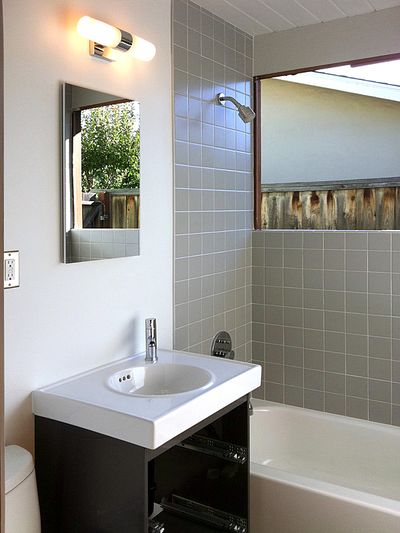
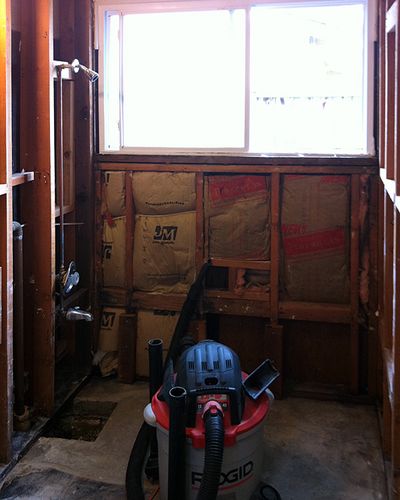
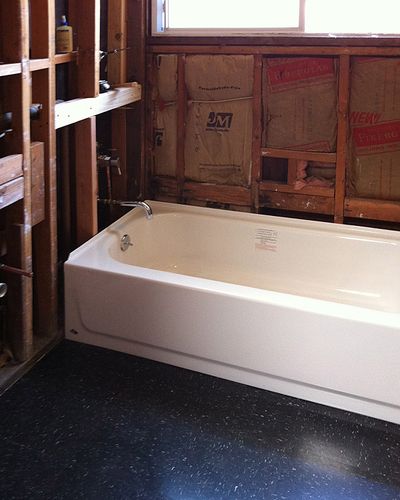
Giving our own projects a break, we took the last few days to give Diane and Greg's bathroom some new life. What started as an ailing 1963-vintage bathroom on Monday was gutted, re-plumbed, re-floored and with a new tub by lunchtime yesterday with all sorts of supply runs in-between.

1

2

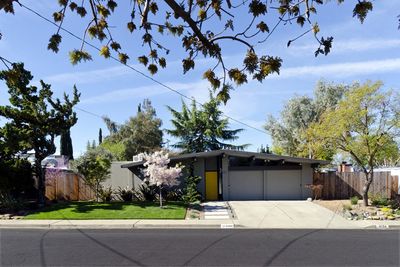
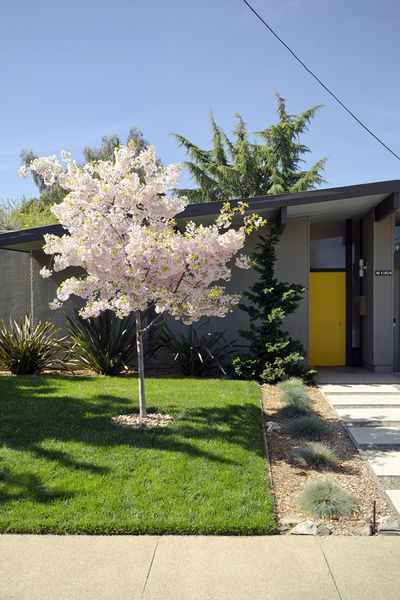
We anticipate the entire project coming in well under $5K and — although modest in styling — will flow well with the rest of their otherwise fairly original 1963 flat-roofed Eichler-built home in Concord.

Hopefully, we'll have "after" pictures up soon…

Uncategorized

Closet-door-a-palooza

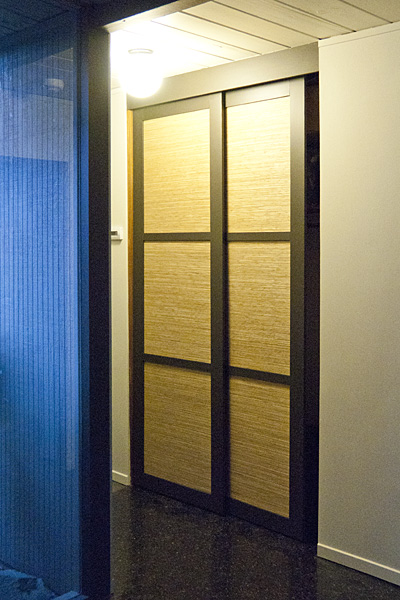
Closet-door-a-palooza is what Casie called this past weekend… and while it wasn't "palooza"-worthy, we did end up finishing the doors for the hall closet.

The old doors were beat… and had been sitting outside for four years. We had purchased wood and supplies last year but are now just getting into a place where we could tackle the project.

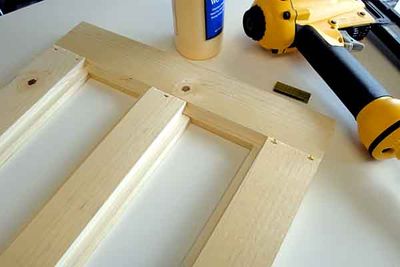
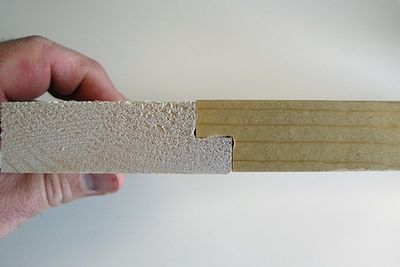
While I had envisioned how to make these for months, for starters, I made a small prototype which helped to bring it to life a bit.

DSC03348

D3

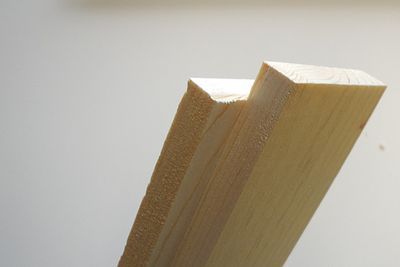
The design was pretty simple and very similar to the original — a simple channel (3/8in sq) was rabbetted into one side. Ideally, this would be done using a dado blade, but I set the table saw to make two passes to cut the chunk out which worked pretty well (and we now have a ton of kindling). From there, it was like assembling a Lincoln Log house: top, bottom and stiles. We used pocket screws to hold the stiles (the up/down parts) to the top and bottom rails and used glue and staples to hold in the thinner center rails… a pretty solid construction. The trickiest part was the double-rabbet needed for the rails — a dado would have been easier and safer here.

D4

D6

One of the hardest parts was hanging the doors. With the built-in "skirt" (or fascia) hiding the original track, getting a new track to work was problematic. The old door/track design (which used custom, builder-made tracks) just lifted into place whereas newer systems necessitates you to tip and swing the door onto the track… which was difficult with the skirt in the way as it prevented the door from swinging out far enough. After a failed hanging attempt, we discovered we needed to hang the track 1-1/2in lower and 3/4in back which allowed enough room for the doors to swing in. Kre8 has a pretty good explanation of this.

Once we figure all of this out, we just needed to create doors the correct height, cover the panels with grass-cloth and hang.

D1

Some notes:

  • We got the grasscloth online and used Super-77 to adhere it to the masonite/hardboard panels (Masonite was purchase at Lowes).
  • All lumber came from Home Depot — 1X4s for the stiles and bottom rail, 1X6s for the top rail and the center rails were 1X4s trimmed in half. We used fir. We stored the wood flat for a year and some of it got twisty — making it unusable. If we were to do it again, I might consider ripping down plywood or using MDF… or springing for furniture-grade lumber. Straightness is important here.
  • The original doors are a bit over 1in thick. The new ones use "one-by" lumber which is only 3/4in thick… a bummer, but it's what's available without custom milling. The 3/4in also made modern track systems possible without rabbetting the top of the doors for the rollers to inset. We used the Stanley track sytem, but there are a few others out there. The Stanley system is nice as adjusting is as easy as turning a dial — the others would have been more difficult… and because of the "un-square-ness" of the house, adjusting was very necessary.
  • We used a framing point driver to secure the panels in the doors and it worked very well. I'd suggest picking one up if you're going to do this.
  • We used pocket screws to secure the top and bottom rails to the stiles along with a good bit of Gorilla Glue — they're rock solid. The gorilla glue is nice as it expands to fill any void and sands smooth (alleviating putty).
  • The door frames are painted the same color as the beams — a dark brown.
  • The original doors have bottom tracks (grooves cut into the bottoms of the doors) which will be tricky to use since the doors now tip/swing into place. We might have to install the doors, install the bottom guide and hope we never have to remove the doors (as they'll then not "tip out")…


Uncategorized

Put a Bird in It…

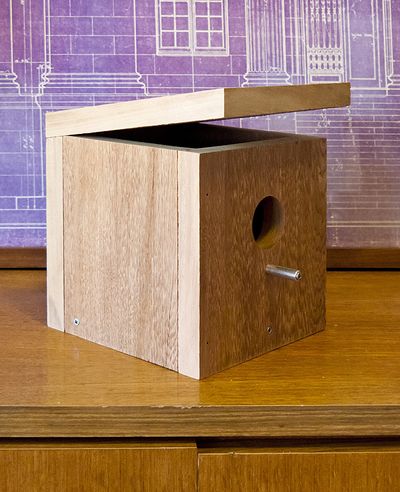
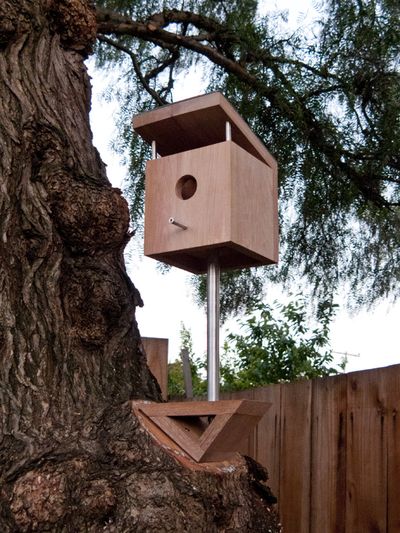
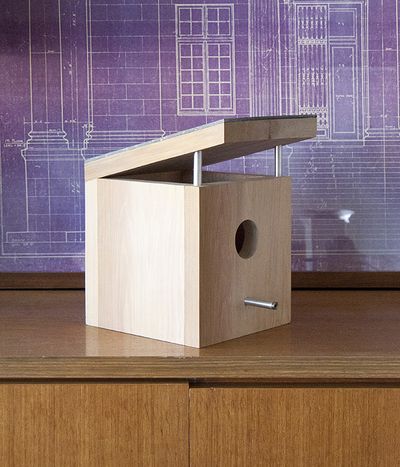
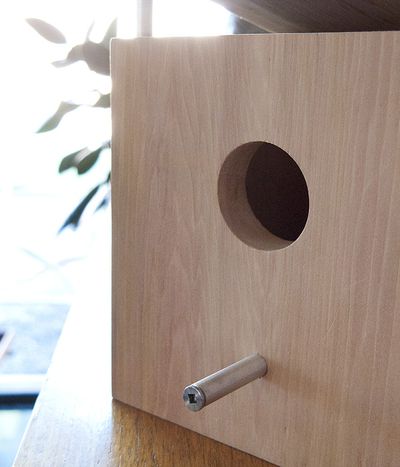
Yesterday, in an attempt to avoid going to the dog-track and to use up some spare wood, I made birhouses (plural). This one is made of cedar with aluminum supports and a VCT roof. Some of the others used up some spare Eichler siding and redwood shelf planks.

Need one? I'm wondering how they'd fare on Casie's Etsy site.

Bhouse01

Bhouse02

Bhouse03

Uncategorized

EcoMulch…

Spring is here and it's time for some landscaping attention.

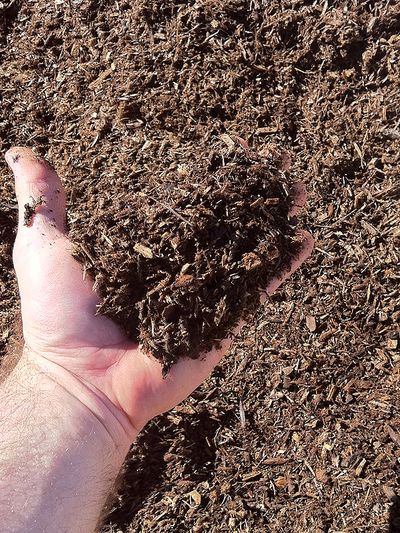
Fortunately, there is not a lot is on the docket, but one of the things we needed to take care of was re-mulching the side-beds and side-yard. We had previously used a type of mulch called "playground chip" which is very consistently chopped cedar wood (wood only — no bark). The trouble is that it (1) doesn't really decay like "real" mulch does and (2) it's so consistent that — while it looks beautiful when first installed — when it gets leaves, etc. intertwined within it, it looks messy.

Enter EcoMulch

I'm not sure of "eco" was originally meant to mean "economy" or "ecology", but it kind stands for both in this case.

"Ecology" in that it's a locally produced product — just a few miles from here… so the carbon footprint insofar as trucking and bagging mulch (i.e.: the bags at Home Depot) is much lower. As a company, they're also very dedicated to local-environmental issues an causes.

"Economy" in that — at less than $30/yard — the price is 1/2 of what you'd pay at most landscape shops and a fraction of what it'd cost if buying by-the-bag at the local home center.

We ordered the Eco Large Natural which blends in well with what we have going on, but there's lots of other options including black, brown, red, etc…

They're also locally owned by Grant and Heather (and family)… Grant also runs Hamilton Tree Service (an obvious sorce of the raw materials) who we hope to have back to give the trees a bit of sprucing up.

2

Renovation // Transformation

Tip(s) of the Day

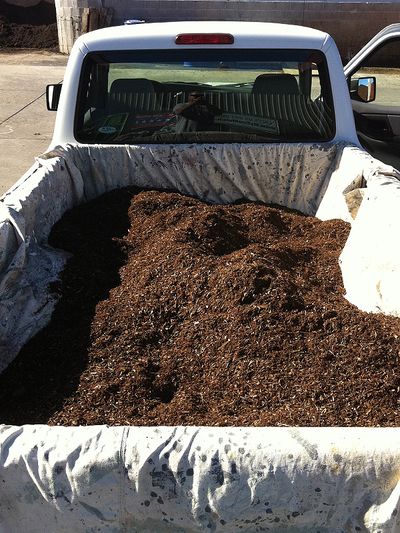
Tip #1: When loading mulch (sand, gravel, etc) into your truck, put a tarp down first… it makes clean-up a snap and allows you to either (1) pull out a load of mulch onto the ground in one fell swoop or (2) get that last wheelbarrow full of material by rolling up and dumping the tarp.

Tip #2: Check out EcoMulch… the load of mulch above costs $8 ($29/cubic-yard… this is 1/4 yard). This is the "mini — while the "mini" is a bit fine, the "large" is a bit large for my tastes — at least this grinding (I'm sure it varies a bit). It's processed locally… therefore has a lower carbon footprint vs. mulch shipped from Oregon.

T1

T2

T3

Scroll to Top