Framing can be expensive and it's the kind of thing that — with a little DIY — you can generally save yourself quite a bit of coin on. However, materials — namely good moulding — can be hard to come by. I've made frames myself from scratch, but when you factor in the time to source the wood and make the required cuts, rebates, and dados, it's hardly worth it.
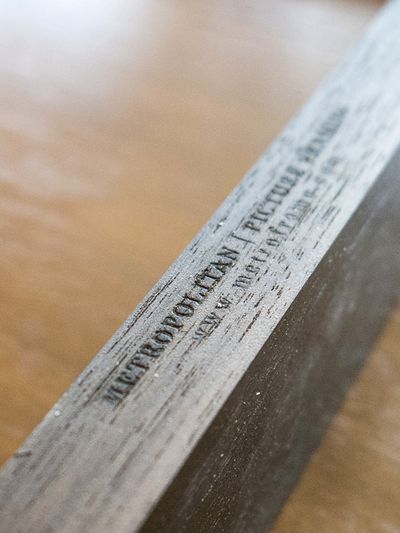
We've purchased framing supplies from Metroframe.com for many years (since we were in West Oakland, so it must be nearly 10 years now… yikes). They sell a good amount of high-quality wood mouldings and — if sourced wisely — can save some money, specifically on shipping. One of their options for joining is "wedge joining" which used these ingenious little plastic wedges to hold the frames edges together. The bonus here is that you can join them yourself and save lots on shipping and packing costs — shipping a large frame (30X40, perhaps)‚ can cost as much as the frame itself, but shipping un-joined pieces is quite cost-effective. They also sell strainers, which is a pro-way of keeping the artwork in the frame as well as spacers and other framing needs. Purchasing glass or plexi from them isn't necessarily economical based on the shipping notion above, but I think 75% of the art in our house is framed with one of their mouldings. We'll generally head to a glass shop or TAP plastics for glazing.

Assembly with the wedges is quite easy. I usually use a teeny dab of glue at the joint as well, but it's a easy as putting the pieces together, inserting the wedge and giving a light tap with a rubber mallet. If you're gluing, you'll want to turn the frame over to ensure the face is flush, too (if not, a light tap on the face will align the pieces before the glue dries) and you move on to the next corner. It takes less than 5 minutes to assemble them this way which is often longer than it takes to unpack them — they take great care in packing your stuff well for transport. The frame kit comes with pretty much everything you'll need save, perhaps, a hanger doo-dad. In fact, it's so easy and pain-free to put together that I assembled it on our dining room table with no worries of damage (… just a little newspaper under the corner eased the blow of the mallet)
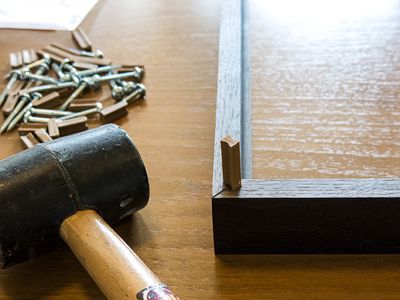
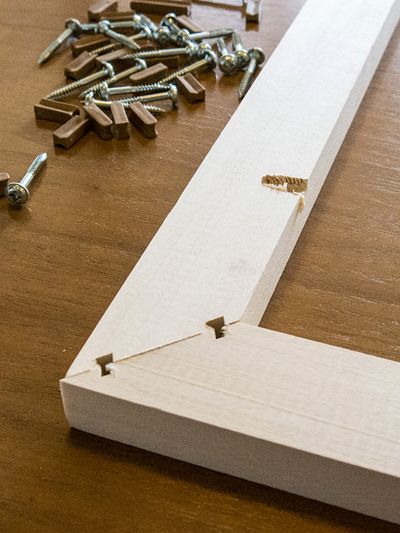
[The square-head screws are to hold the strainer in the back of the frame once the glazing and art are in. They seem like the same screws that Kreg uses in their pocket-hole kits with super-sharp screw points to hold them in tight. You'll need a square-head screw bit to work with them.]
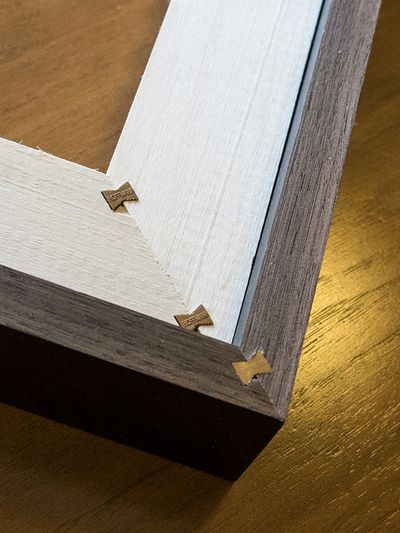
We've often purchased the unfinished walnut which we've finished on-site with Danish oil and wax — a process that's super easy and takes just a few hours (the longest part is waiting for the oil to dry). The wood and finish is beautiful (see images below) and has held up well — the print below is in the bathroom, so it sees a good bit of moisture which hasn't effected the wood at all. We've also purchased their pre-finished "ebony" walnut and "charcoal" walnut — the latter being a bit more transparent to let the wood tone show through. Both are beautiful.
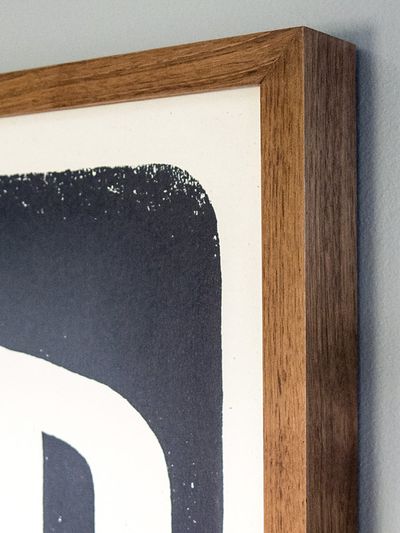
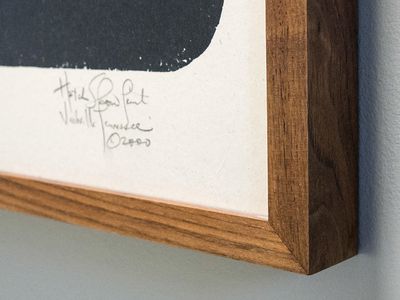
[Unfinished walnut finished on-site with Danish oil and wax]
The profiles on most of our stuff is #106 which allows for plexi, a print, a backing board and a strainer. We've also purchased a deeper frame and used a matching spacer (which you can buy from them) to offset the art just a bit from the glass. Here's a photo by our friend Abner which is mounted to aluminum and offset with a spacer. We're lucky enough to have this print, too, framed in oil-finished walnut with spacers.
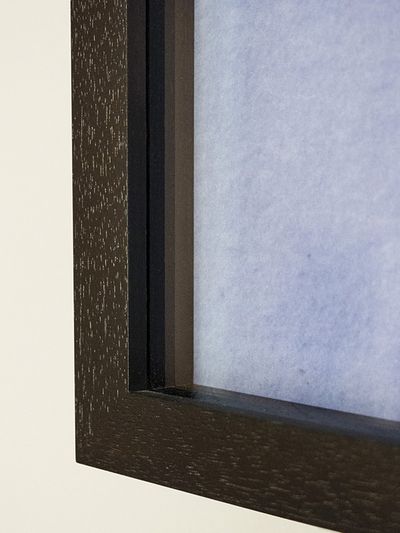
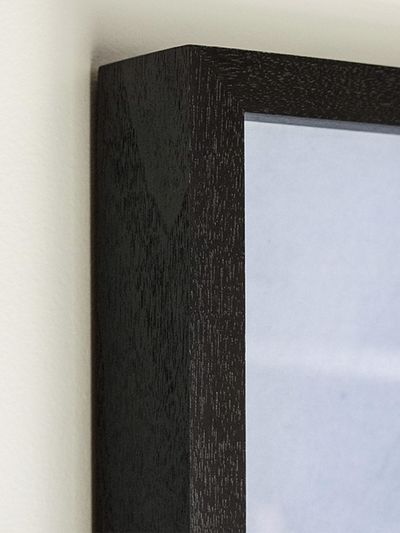
[Ebony stain with spacer]
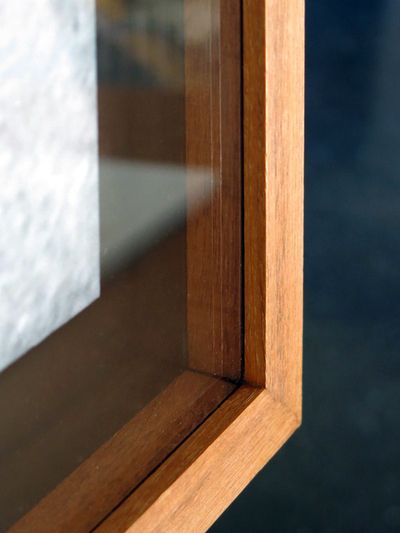
[Oil/wax finished walnut with spacer]
Our latest frame is unfinished ash — a new "look" for the nursery — as the dark walnut might be a bit heavy in there. We purchased a few prints from our friends Jill and Jason who run an amazing art-offshoot of their design business called Wee Society. Jason is a great designer and illustrator and I'm glad to finally have a few of his pieces in the house — I even conned he and Jill into signing them. I had the opportunuty to pick up some of his bigfoot inspired pieces but was concerned that they might be a bit much for the space (and the kid), but I'm still eyeing them… maybe later when the kid's old enough to appreciate the coolness we'll hit him up. You can check out their new collaboration with art.com where they have lots more (and a lot of new) prints.


We picked up a 24X36in ash frame for the silkscreen above and finished it with Minwax's Wipe-on Polyurethane which is almost as easy to work with as the Danish oil. Drying time is a lot less and it gets a bit sticky on your hands (wear gloves or wash-up quickly), but the finish is a bit more durable. I'll top it off with a bit of Liberon's Black Bison wax which will give it a soft shine and a bit of extra protection. Given the cost of framing a 24X36 print otherwise, this will be a bargain.
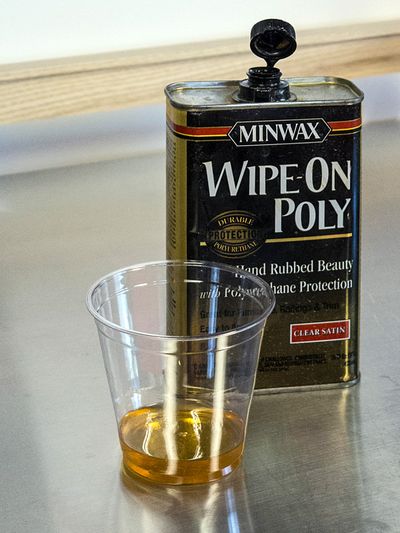
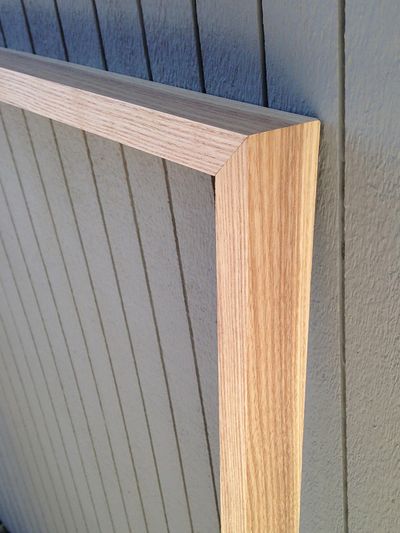
[The ash frame drying in the sun. The poly gives the wood just a bit of glow and a lot of protection]
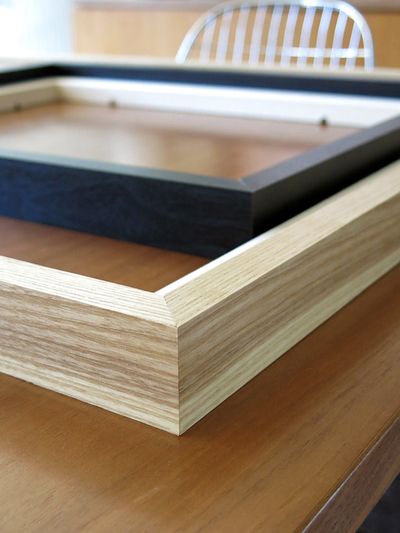
[The ash frame finished and waxed. All in all, the finishing and waxing took about two hours — the longest part being the dry time… 15mins to wipe on the poly, 1.5 hours to dry and 15mins applying and buffing the wax… an easy weekend project. You can also really tell how the glue adds to the stabilty of a frame this large. It's solid.]
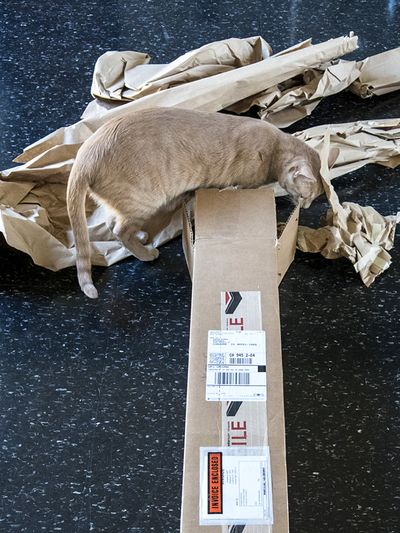
[Arthur having fun with the remains. Yes, we tossed a kitty treat deep into the box…]