One of the first things we did when we bought the house was to plan the wired house network prior to putting on the foam roof. This was a good move in a number of ways and we've gotten a lot of use out of it.
We wired each room (8 runs total) with cat-6 (data), cat-3 (phone) and RG6 (cable) and installed plates in each room. We plumbed everything into a central wiring box that handles the distribution along with hubs to handle each of the cable runs and clusters. We were even able to get some speaker runs (back/surround) in place before the foam went on. Although not terribly complex or costly (comparatively… all-in, i think it was $500), it's a pretty robust system and definitely something to plan if you're putting on a new roof… along with some new electrical for exterior lighting. This was one of the things we liked when working with Rick at Abril roofing. He worked with us to separate the "scrape" from the "foam and coat" which allowed for this to happen.
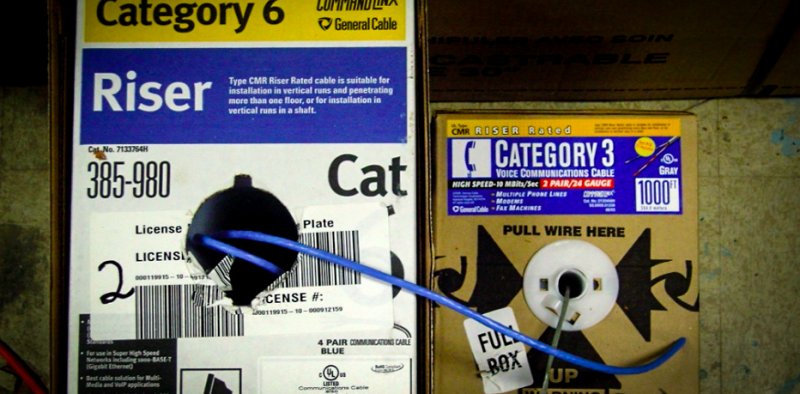 (One of the things about writing this post is that it reminded me that I ran cat-6 instead of cat-5e wire… yay, me!)
However, when the new roof was going on (1) it was very early in the process, (2) technology wasn't quite where it is today and (3) we didn't have quite as much time to do it…
Fast forward 8 years… wireless technology has gotten a lot better. Bandwidths have gotten more crowded. Folks have added a lot more devices and the demand of our old system were being taxed a bit. Since the installation, we've added a home media server, several wireless home security cameras, a wireless printer, an accessory building wired for sound/data, a good number of powered speaker points, a few new gaming consoles, and of course tablets and phones… we needed an upgrade. Or, actually, a downgrade.
Over the years, I had added a number of Apple Airport Express (AEXP) wireless routers to handle the music distribution. They're awesome (and we're still using them), but if not configured correctly, they can crowd the airspace. We also had a few networks running: for security, guests, etc…
Fortunately, fellow Eichler owner Chris (… and Chris and Chris and Dan) was able to lend a hand and a good bit of wisdom to help reconfigure the network utilizing more of the wired network and using fewer of the Airports and broadcasting fewer of the signals. Chris drew up a diagram utilizing two new Airport Extremes (AEXT) (6th generation) that individually are far more powerful than the single older Airport Extreme (4th generation), but together help to blanket the house in plenty of signal while keeping the individual networks closer to where they need to be without interfering with each other. The AEXT in the garage broadcasts a separate network exclusively for the security cameras which should alleviate a lot of the traffic crosstalk and help to solve a signal/quality problem I've been working on with the nice folks at DropCam/Nest. The AEXT in the living room broadcasts a set of networks most usable by the "house". We're also leveraging far more of the wired network and letting the new AEXTs route those paths as appropriate now that each room has its own AEXP.
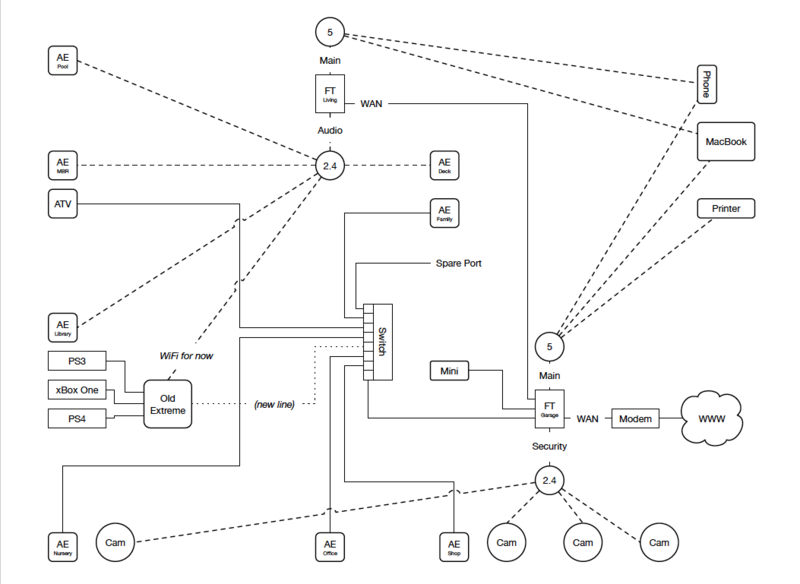
 (A much simpler universe — only 3 wireless Expresses… I didn't snap a screenshot of the previous, but there were 3 more Expresses and lots more of them were wireless…)
I was also able to clean-up the wiring box quite a bit and place the new Airport Extreme a good bit higher. Since it was on a shelf also used for storage, I built a small frame around it to keep it from getting knocked around, but the added height helps the two networks it is broadcasting (security and data) to travel a bit further… especially since we've added sound-proof drywall to several areas in the house which eat up the signals (and the DropCams are notoriously signal-shy).
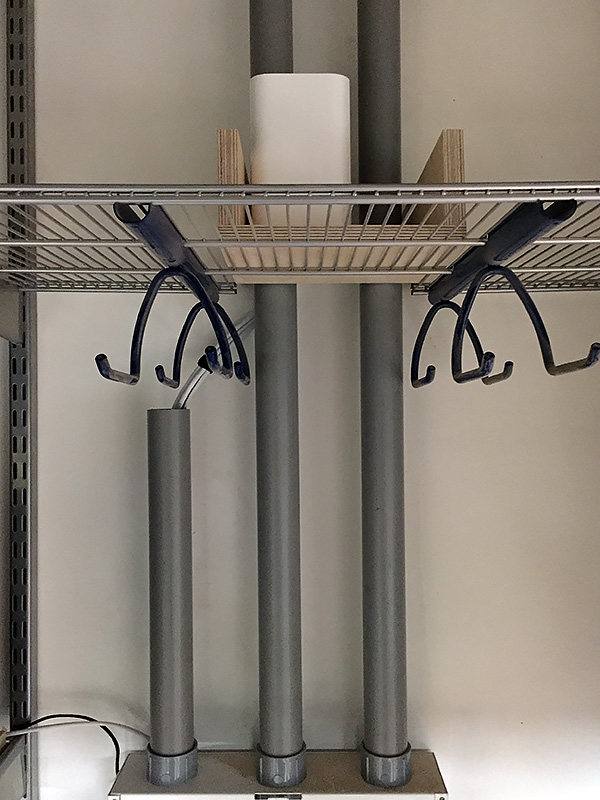 (The blue hooks conveniently hold the hoses for the dust collection system for the workshop when not in use… remember, although nerdy today, it's a workshop most days…)
I was also able to map the ports in the house thanks to a $10 tool from Amazon. In the initial install, which wire went where was of less consequence since they all tied into a central switch, but since Chris' plan utilized some of the lines a bit more strategically, it was more important to know which line went where — specifically the living room and server ports.

One of the changes was to put the second Airport Extreme in the house wired directly back to the main Airport Extreme (WAN to LAN). Fortunately, its small footprint and nice overall design blends nicely with the existing interior and is helping to re-broadcast one signal (data) while broadcasting another separate one (audio).
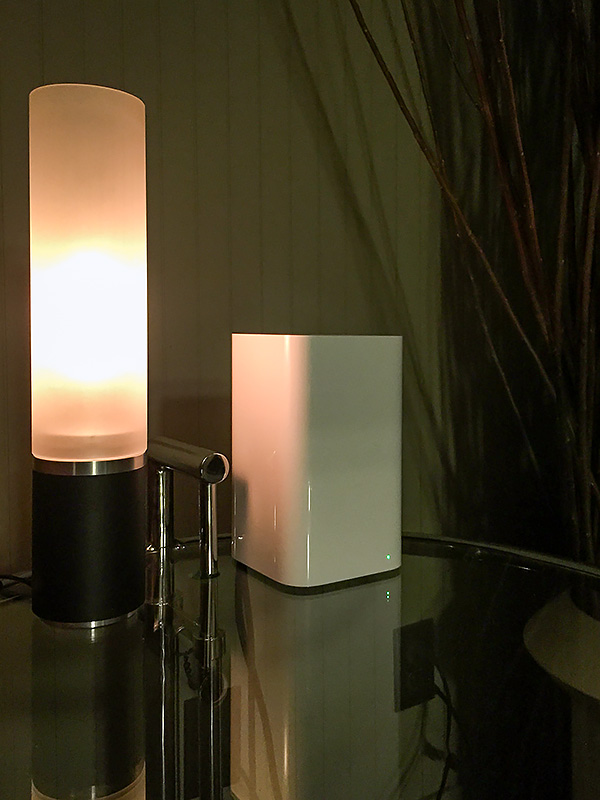 (Pablo Pardo (as a rare Banana Republic Home collaboration), Eileen Gray and Jony Ive… together on a table (and as a table)…)
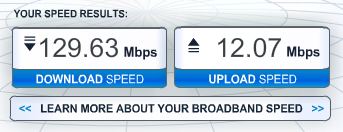
Ok… I think this upgrade worked pretty well. This is with the cameras uploading 4 separate feeds.