I was having a discussion with a mid-century fan the other day about an Eichler for sale near us. They lamented the painted beams. My response: “They were always painted”…

The Discussion
There are many ways a house can be built and many ways a mid-century version might be designed, but in the case of Eichler-built homes — especially when the Concord neighborhoods were built in 1963-1965 — the beams were always painted. Added to that, the ceilings were always stained — and the panelling was always toned with oil. Why? Practicality.
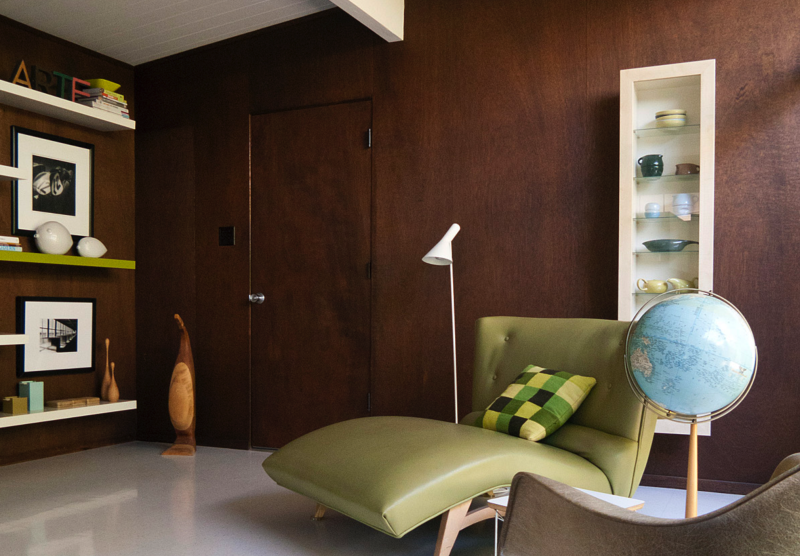
[Iris and Michael's time capsule in Marin had dark-stained paneling as original]
Mass Production
Eichler homes were tract-built. There were a few custom ones over the years, but the overwhelming majority were built dozens at a time in developments like Fairglen, Rancho Del Diablo, and Rancho San Miguel. There were also some very early ones in the South Bay that might lie outside the norm — however, once Eichler Homes, Inc. was in full swing, they had a bit of a system down.
While Joseph Eichler contracted a few famous architects to design the homes, these homes were built by general tradespeople of the day, not specialized craftspeople. Materials were brought in on giant trucks — lumber was not hand selected. Materials that went into the ceilings, walls and cabinetry was often mismatched. Added to that, there were deadlines and mishaps. There was no time to match grain and coatings were used to even out variegated sheets of paneling, ceiling planks from different trees, and posts that were not the same cut as the beams. Reportedly, there was one custom-spaced A-frame in Marin that was delivered unpainted, but the other 99.9% were the victims of the concessions inherent in mass production.
Inside-out
The idea of blurring the inside and outside has its advantages — sweeping vistas and a general oneness with the outside. However, the outside is not kind to wood. It’s sunny, hot, and often wet. The main reason that both beams and siding were coated was for protection. Fasteners would leach and wood would split. In many cases, these materials were “stained” with either a semi-transparent or opaque stain. This is not the same type to stain you’d find in a Minwax can — it’s essentially thin paint. Much of the grain of the wood would show through, but the original color was obscured with a brown, gray, or green tone. When they weren't stained, they were painted or oiled.
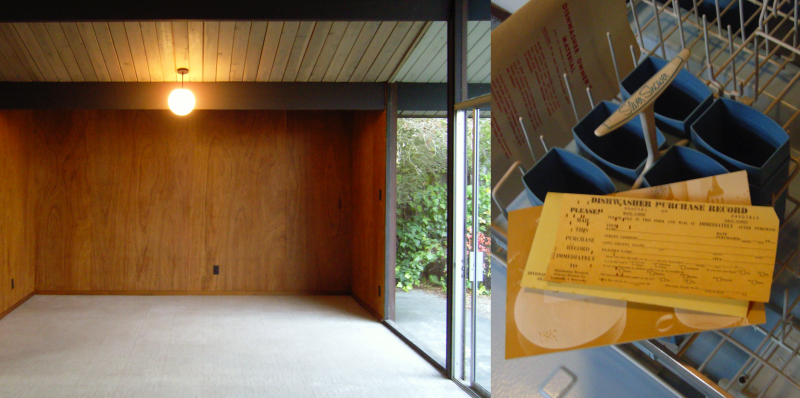
[This time capsule — complete with painted beams, stained ceiling and toned paneling was so original that the dishwasher was never used]
What this means for Eichlers, specifically:
- Siding: All siding was either stained or painted. As mentioned above, the original Cabot stain was more like a thinned down paint.
-
Beams/posts: The same as the siding, the beams needed to to live inside and out and were stained or painted. Originally, these were either chalk-white or dark brown.
- Paneling: All luan paneling was “toned” — from a light yellow to a dark brown stain (and some that were almost lime washed), all interior paneling had some sort of tone on them to even out the walls from sheet to sheet.
- Ceilings: All ceilings were coated: Like the paneling, the ceilings needed to be evened out — and needed some general protection. The non-yellowing acrylic topcoats of today did not exist in the late 50s and early 60s. Coatings were oil based and some even had lead.
- Doors/jambs: Doors, like paneling, often were inconsistent and the same treatment used on the paneling was used on the doors
- Drywall: Post 1960, drywall was used past the main living areas. Rumor is that this was because of a fire-related code change in 1961 that would not allow paneling in the bedrooms. Nonetheless, the 60s in general brought all kinds of ‘innovation”. Our 1963 build has original 3-wire Romex and pink fiberglass insulation stamped with “new”. The drywall compound often had asbestos in it and the paint generally had lead. Fun times!

[An original shot by Julius Shulman of a Los Angeles area Eichler]
Why does this matter?
If you’re going to have an informed discussion on Eichler-built homes, it’s important to know the history and provenance of the houses — and understand why things were done the way that they were done. It’s also important to acknowledge that Eichler-built homes might be different than another mid-century designed home. Also, when planning your renovations, it’s crucial to keep the “why” in mind as your vision might not pair well with your climate.
While we’re on the topic: Eichler Homes Inc, built homes in the San Francisco Bay Area (Marin, Oakland, San Jose), the Los Angeles area (Thousand Oaks, Orange), and a small handful in New York State. So, no: your aunt's house in Santa Rosa is not an Eichler, so make sure the real estate agent doesn’t call it that or you might get into awkward conversations at closing. It’s a gorgeous mid-century home, though — and it worth every penny — but don’t mislabel things that cost a million dollars. Neither is your friend’s house in Portland — that’s probably a “Rummer”… and they’re awesome, too.
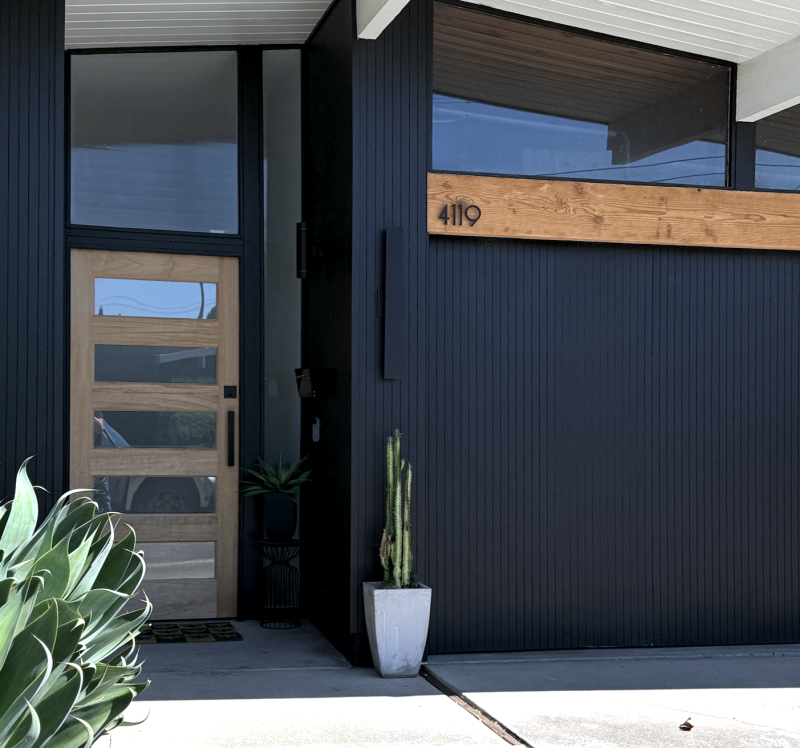
[Today, some folks have stripped the original wood and made other changes. Fortunately, this beam rarely see direct sun and very little moisture.]
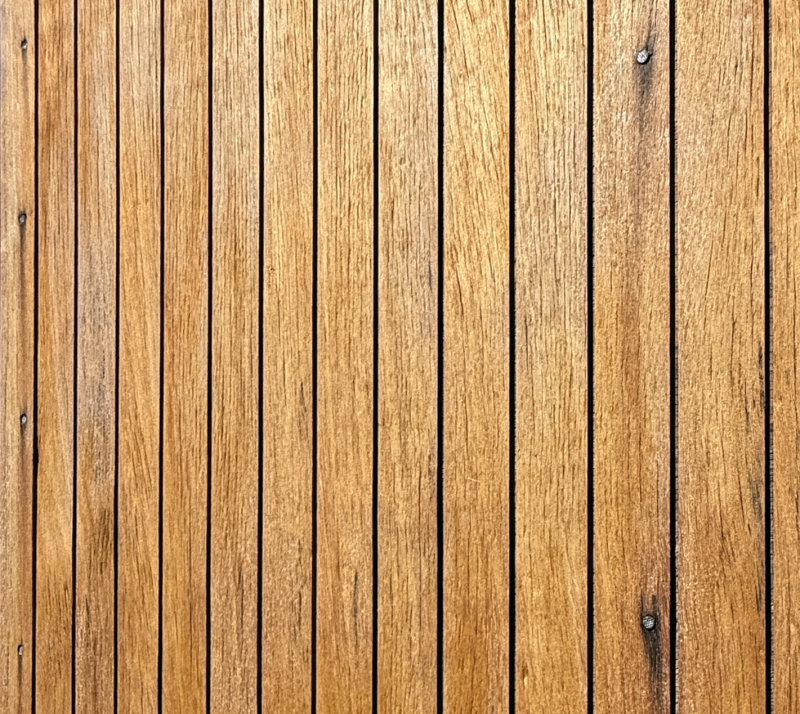
[When left exposed to the elements, even galvanized fasteners leach a bit of iron oxide which causes runs — a reaction to the tannins in the wood.]